Thammasat Maternity and Paternity Policies

Thammasat University has a clear and supportive maternity and paternity policies, permitting 90 days maternity leave and 150 days leave-without-pay for father and mother to raise their child.

The 2006 university announcement on criteria, method, authority for permitting leave, and leave-with-pay allows in total 90 days of maternity leave for a mother. After the end of the 90 day-period, the mother can leave-without-pay for 150 days in order to take care of her child. The father also have the right to leave-without-pay for 150 days to help his lawfully wedded wife take care of their child.

Please see the document: http://203.131.211.58/hrtuweb/content/leave/files/notice_49.pdf
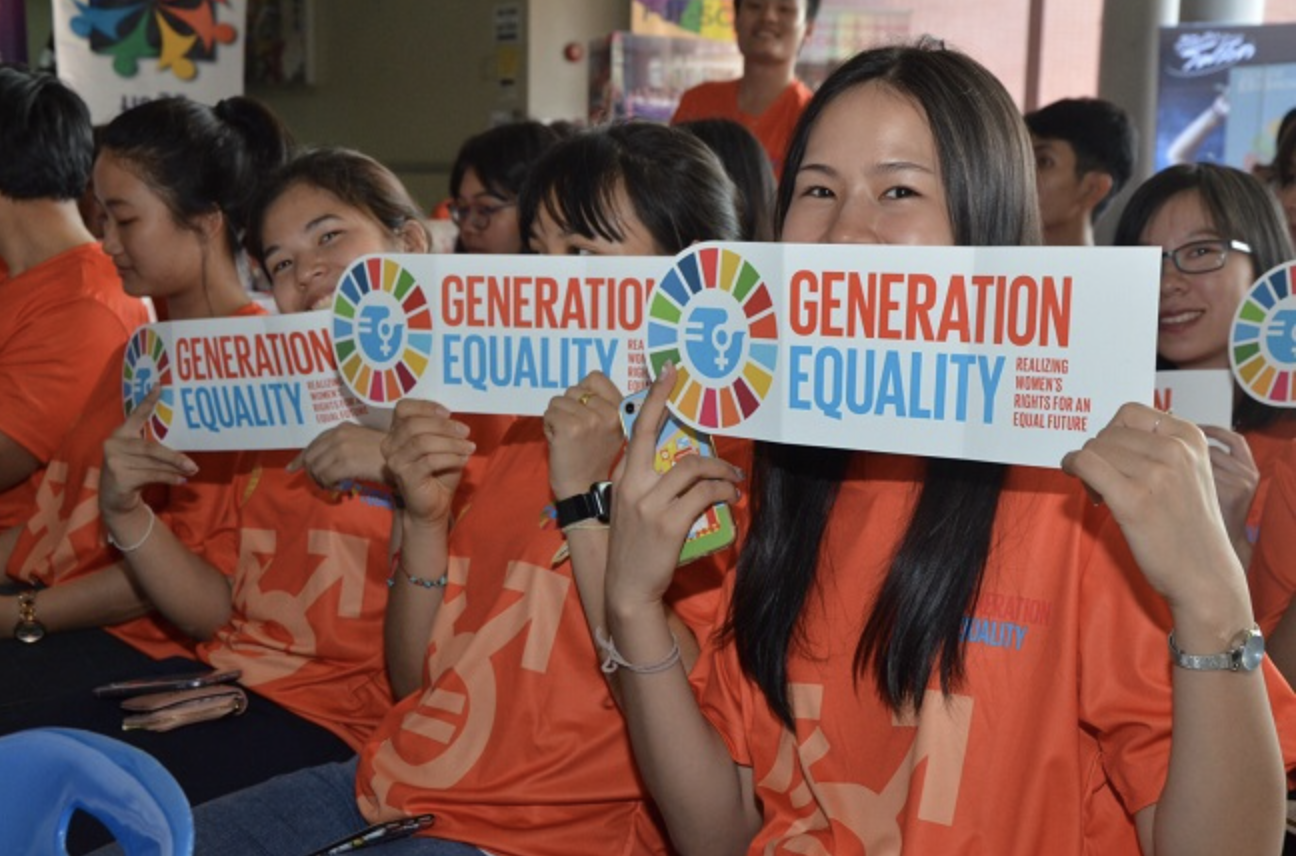
TU Say No To Sexual Harassment on Campus

In November 2019, Thammasat University, UN Women, and domestic partner such as Thai Health Promotion Foundation and NGOs on gender and health issues, launched a project to end sexual harassment on campus under a concept “Generation Equality”. Thammasat University is the first university in the region on this issue.

The objectives of this project are to promote and protect human rights especially in the dimension of male-female and gender diversity, to build social network for monitoring, investigating, healing, and bringing justice equally to all, and to create a safe space and confidence on campus life.

Web reference: https://tu.ac.th/thammasat-un-women-tu-say-no-to-sexual-harassment-on-campus

https://drive.google.com/file/d/1sZx26YqBeu7Wvb0FFO1RGUtKIknI5do9/view

Thammasat Smoke-Free Policy

Since 2010, Thammasat University enacted Thammasat Smoke Free Policy. This university policy corresponds with the policy of Ministry of Public Health in 2010 in accordance with the Non-smoker protection bill 1992.

According to the policy, all indoor areas are smoke-free areas. However, each campus can determine its own smoking areas with certain conditions. The conditions are (1) the area must not be located near entrances or exits of public place, (2) it must not disturb other people, and (3) smoking must be allowed only in that specific areas.

Web reference: http://www.econ.tu.ac.th/oldweb/doc/content/1112/TU_No_Smoking.pdf

Viva City: TU Counselling

As stress from studies and university life becomes more challenging for students, in 2019, Thammasat University established “Viva City: TU Counselling” to provide counselling to students in need. This service is provided by Student Affairs Department in cooperation with experts from Department of Psychology, Faculty of Liberal Arts, Thammasat University.

Viva City provides 24-hour counselling service through call centre. In-person counselling service is also provided in weekdays from 0830 until 2200 hours at a facility in student housing complex. With appointment, students can consult with a psychiatrist. Counselling in English is also provided to international students in both campus.

This programme is a scaling up of counselling section under Student Affairs Department.

See website: https://web.facebook.com/vivacity.tu

https://drive.google.com/file/d/1wBLF893sQHu3CeVeyk_iqBUMD1WTWAF6/view?usp=sharing

Thammasat Well-being Centre by Student Affairs Department

In 2019, Student Affairs Department, Thammasat University established “Thammasat Well-being Centre” that provides preliminary health service, health promotion activities, health and accident insurance, and sexual healthcare for students.

The centre is located at Ground Floor, SC Building, tel. 02-6966600-2

Website: http://satu.colorpack.net/index.php/th/campus-life/well-being

https://web.facebook.com/Thammasat-Well-Being-Center-105619747526248

The 51st batch of Graduate Volunteer Programme by Puey School of Development Studies (PSDS)

In 2019, Puey School of Development Studies (PSDS) cooperated with academic institutions and civil society organisations (CSO) in offering field sites for the “Graduate Volunteer” students. The class of 2019 is the 51st batch of the long-running and first-of-its-kind Graduate Volunteer Programme, offered by PSDS, Thammasat University.

The three organisations partnering with PSDS are the followings:

  1. Princess Maha Chakri Sirindhorn Anthropology Centre (Public Organisation)
  2. Voluntary Service Overseas: VSO International
  3. Thai Health Promotion Foundation

The 13 sites cover provinces from the North (Chiang Mai, Chiang Rai, Lumphun, Phayao (2)), the West (Kanchanaburi and Tak (2)), the Northeast (Khon Khaen and Surin), and the South (Surat Thani, Nan, Nakorn Si Thammarat).

The Graduate Volunteer Programme is one-year programme. The students spend 3 months for course work, 7 months for field studies, and 2 months for writing the thesis. It was established by Prof. Dr. Puey Ungphakorn in the late 1960s. This programme has been adopted by several universities all over Thailand.

See related documents here:

Programme website: https://www.psds.tu.ac.th/?fbclid=IwAR3-psLiYJ5oRxuestkZhcfbwRZFOe6_wotDU2n3Eaj1Sd2y8cAOkdY2pm4

The Development of Monitoring and Evaluation System for the Promotion of Sustainable Consumption and Production in Thailand: Phase 2

In 2019, Thammasat University, by Faculty of Economics, Thammasat University (through Thammasat University Research And Consultancy Institute (TURAC)), received a funding for the project “The Development of Monitoring and Evaluation System for the Promotion of Sustainable Consumption and Production in Thailand: Phase 2” from Office of Natural Resources and Environmental Policy and Planning (ONEP). This phase-2 project studied the calculation methods of SDG12 indicators, created, improved, and augmented the existing database to enable the importation, evaluation and monitoring of the selected SDG12 indicators.

The five selected indicators are the followings: 12.1.1 Number of countries with sustainable consumption and production (SCP) national action plans or SCP mainstreamed as a priority or a target into national policies; 12.4.2 Hazardous waste generated per capita and proportion of hazardous waste treated, by type of treatment; 12.7.1 Number of countries implementing sustainable public procurement policies and action plans; 12.8.1 Extent to which (i) global citizenship education and (ii) education for sustainable development (including climate change education) are mainstreamed in (a) national education policies; (b) curricula; (c) teacher education; and (d) student assessment; 12.B.1 Number of sustainable tourism strategies or policies and implemented action plans with agreed monitoring and evaluation tools.

This study was conducted by a team of scholars from Faculty of Economics, Thammasat University, Srinakarinwirot University, and Chulalongkorn University.

Thammasat University Collaborating with ONEP in the Revision of the Thailand SCP Roadmap

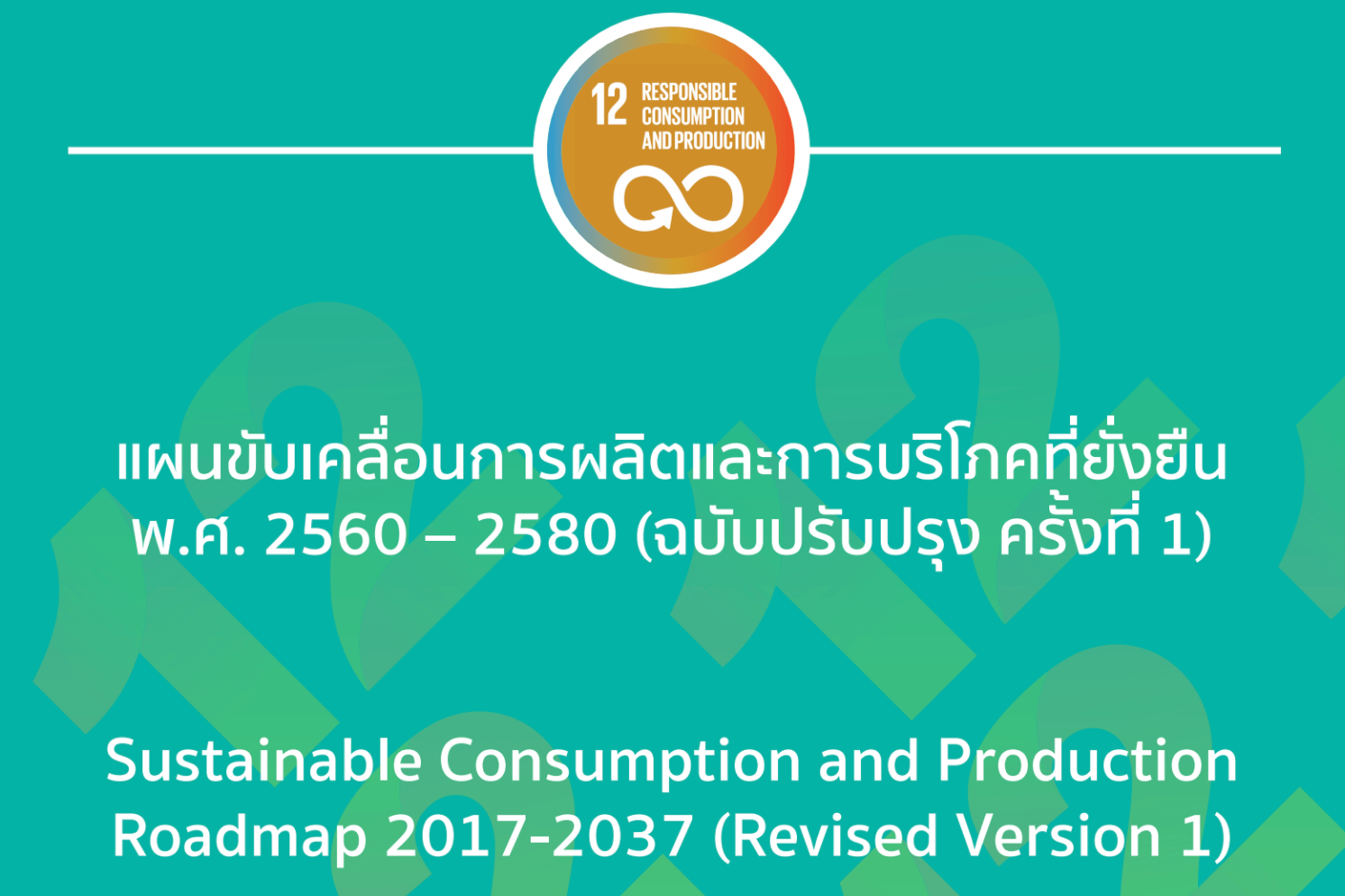
In October 2020, Office of Natural Resource and Environmental Policy and Planning (ONEP) published the first revised version of Thailand Sustainable Consumption and Production Roadmap. This revision is a collaboration between Thammasat University and ONEP.

The purpose is to incorporate SDG 12 indicators as well as the related Master Plan for the National Strategy (2018-2037) into the previous version of the Roadmap which was drafted and implemented before the completion of the Master Plans of the National Strategy. Moreover, the revised roadmap was also designed to show more interconnectedness between sustainable consumption and sustainable production, i.e. all SCP sectors need to work together to achieve the SCP-related SDG goals (meaning SDG 12 and other related goals such as SDG 2 on food system, SDG 11 on building and constructions, SDG 4 on education for sustainable development and SDG 8 on sustainable tourism).

Asst. Prof. Chol Bunnag from Faculty of Economics, Thammasat University, and Director of SDG Research and Support Programme was working in collaboration with ONEP team and other stakeholders.

Please see the Revised SCP Roadmap below:

The Elder School by ICEHR

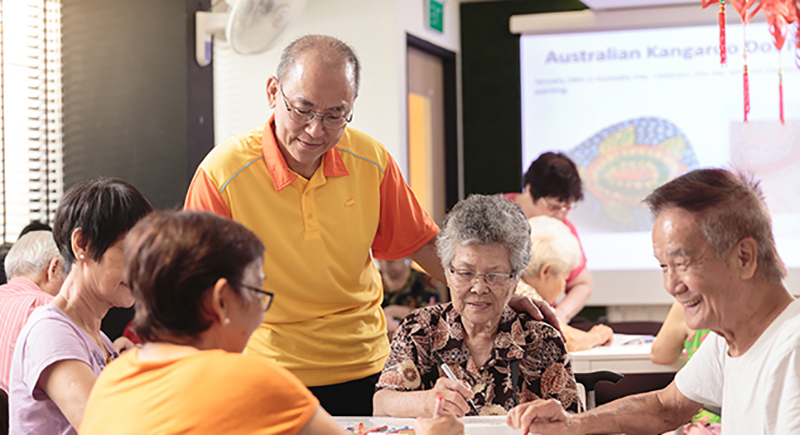
In November 2019, Institute for Continuing Education and Human Resources (ICEHR) offered 3 batches of “Elder School”, the development of elders’ well-being project, in 2019.

The Elder School, established in 2018, provides health-related knowledge and understanding to the elders, enables them to take care their own health, and support the family’s roles in the elderly care process.

In this third year of the school, the two batches were offered at Tha Prachan Campus, and one at Rangsit Campus.

Website:

Senior Complex by Thammasat x GHB

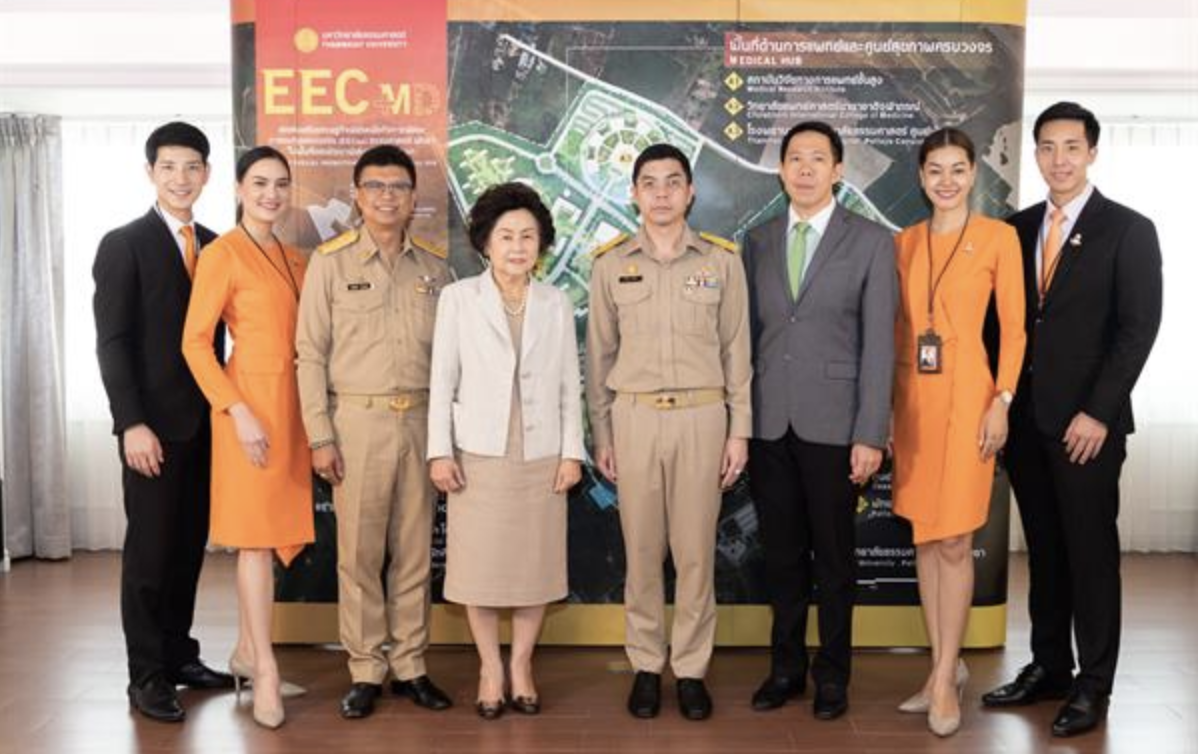
In March 2019, Thammasat University rector signed an MOU with Government Housing Bank for the development of “Senior Complex”, a comprehensive facilities for taking care of elders in the area of Eastern Economic Corridor (EEC). GHB planned to conduct feasibility study and provide 500 million-baht loan for the phase-1 investment in Thammasat University Pattaya Campus.

Website: https://www.ryt9.com/s/prg/2968750