SDG Move phase II

SDG Move, under Faculty of Economics, Thammasat University, was operating as a Strategic Research Issue (SRI) Unit number 14 on SDGs for Thailand Research Fund (TRF), one of the largest granting agency at the time. The role for SDG Move as SRI unit was to follow the implementation and academic progress regarding SDGs both at national and global level, and specify areas in which TRF should grant research fund.

In the period between 2018-2019, SDG Move focused the areas of research grant on the theme of Localizing SDGs as well as base-line research on SDG 3, 6, 10, 11 and 17. It also analyzed the Thailand Science Research and Innovation (TSRI) strategic plan for budget year 200 against the SDGs. It is found that the TSRI strategic plan for budget year 2020 was quite imbalance as the plan was focusing on economic policies.

Please more details on SDG Move here, and its official website here.

Please the report of SDG Move phase II here:

No Gift Policy

Since December 2018, Thammasat University officially announced the university announcement on “Practices for giving and receiving gifts” in order to ensure transparency and good governance.

Essentially, the university (especially university and faculty executives and staff) must not receive gifts or anything convertible to financial value from partner of contract, companies, or any individuals who may have direct or indirect interest with the university, especially in contract signing or continuation, contract inspection, or any other kind of interest. The university, instead, encourages giving “blessing”.

In terms of giving gifts, the university clearly states that it is not necessary to produce or acquire any gifts to give to other departments or faculties. Giving gifts in special occasions such as New Year could have an exception when the gifts are the faculty’s souvenirs or when there is a special reason to support sustainable development or community products.

Please see more details here:

Service Learning Policy: Engaging local stakeholders for university education and SDGs

Since 2014, Thammasat University though Academic Affairs Department has promoted “service learning” approach in the university education by providing a special funding to support faculties who want to initiate service learning course. Under this funding guideline, it requires faculty substantial engaging with communities and stakeholders to the teaching and learning process.

In 2019, the university support 100,000 – 300,000 baht for the approved service learning courses. The amount of the funding is based on the size of the project. At the end of the year, the university gives awards to projects that are proved to be sustainable, efficient, participatory, and engaging several external partners.

Please see the university’s policies and regulations on service learning:

Thammasat University recognises Student Union and Student Council since 1979

Since 1979, Thammasat University recognises the role of Student Union and Student Council by providing democratic elections for both types of student governing bodies. Annually, Thammasat Students elect their own representatives directly through election without interference from university.

The Student Union is responsible for administering and facilitating all matters regarding student activities, such as clubs and each faculty’s student committee. The matters regarding student activities include the allocation of financial activity support from the university, rules for governing club activities, facilitation for the faculty’s student committees, and other policies and activities promoting students’ well-being.

The Student Council checks and balances the propositions of the Student Union (e.g. policies, allocation of the financial support, etc.). The council also plays role in evaluating the Student Union’s performance and has the power (2/3 of the council members) to impeach and remove the Student Union from duty.

In recent years, The Student Union and Council play more important roles in protecting student rights in university and promoting democracy and freedom of expression, not only in the university but also in Thai society.

Please see detail of the university’s regulation here.

Elected representation on the university’s highest governing body

Thammasat University is governed by committees and councils at the university and faculty levels. At the highest level of the university, Thammasat University Council is the main governing body. The council is composed of representatives from several stakeholders. Elected representatives of key internal stakeholders, namely, faculties and university staff, are also included as members of the council.

The composition of the university council is as follows:

  1. Council members by position: The council members in this part include the rector, the Thammasat Association under the King’s patronage, the president of faculty’s council, and the president of the university staff council.
  2. Council members – External Experts: The council members in this part include 14 external experts from various sectors, including governmental organisations, private sector, academic sector.
  3. Council members from a vice rector position: The council member in this part is for a vice rector, selected by the rector. This position is also the secretary of the council.
  4. Council members from faculty’s deans: The council members in this part include deans from 2 faculties.
  5. Council members from institute’s director: The council member in this part includes one director from an institute in the university.
  6. Council members from elected representative from faculties: The council member in this part includes 2 elected university lecturers.
  7. Council members from university staff representative: The council member in this part includes 1 elected university staff
  8. Secretary Assistants

Please see detail of the Thammasat University Council here:

https://tu.ac.th/board

Thammasat Royal Dental Unit offered free dental service in Nonthaburi and Pathum Thani province (2020)

On August 7, 2020, Thammasat Royal Dental Unit, under Faculty of Dentistry, Thammasat University, organised a dental service project, offering free dental service to approximately 200 people (including children, youth, elders, monks), at Nonthaburi municipal office, Nonthaburi province. Then, on September 2, 2020, the unit offered the free dental service to the people at Wat Phosoppolcharoen, Lam Luk Ka district, Pathum Thani Province.

Both projects was funded by the Royal Dental Fund under His Majesty the King and Alumni Relation Office. Approximately 45 medical staff participated in the project.

Please see the project detail here:

Thammasat Mobile Medical Unit at Si Saket Province (2019)

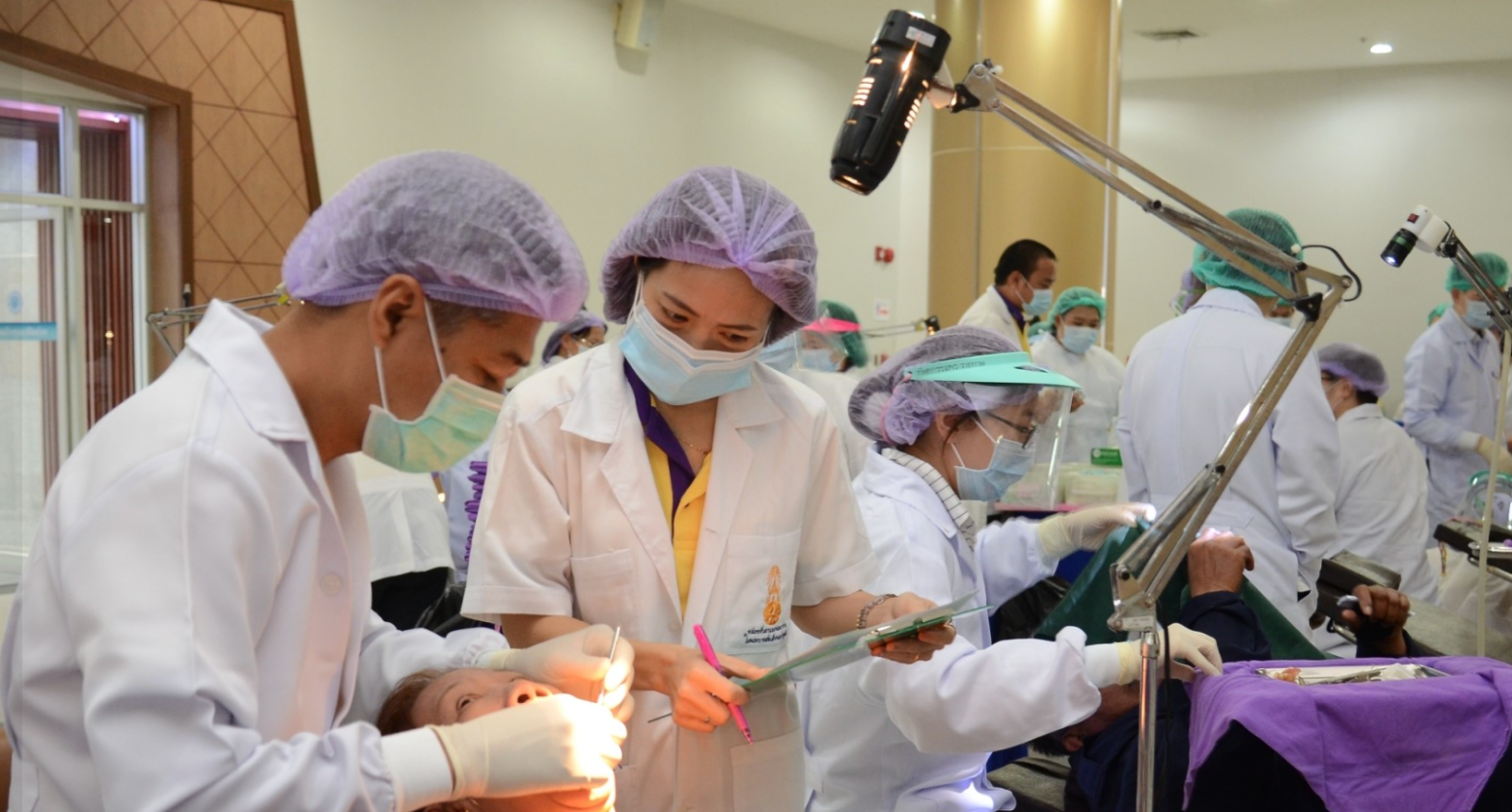
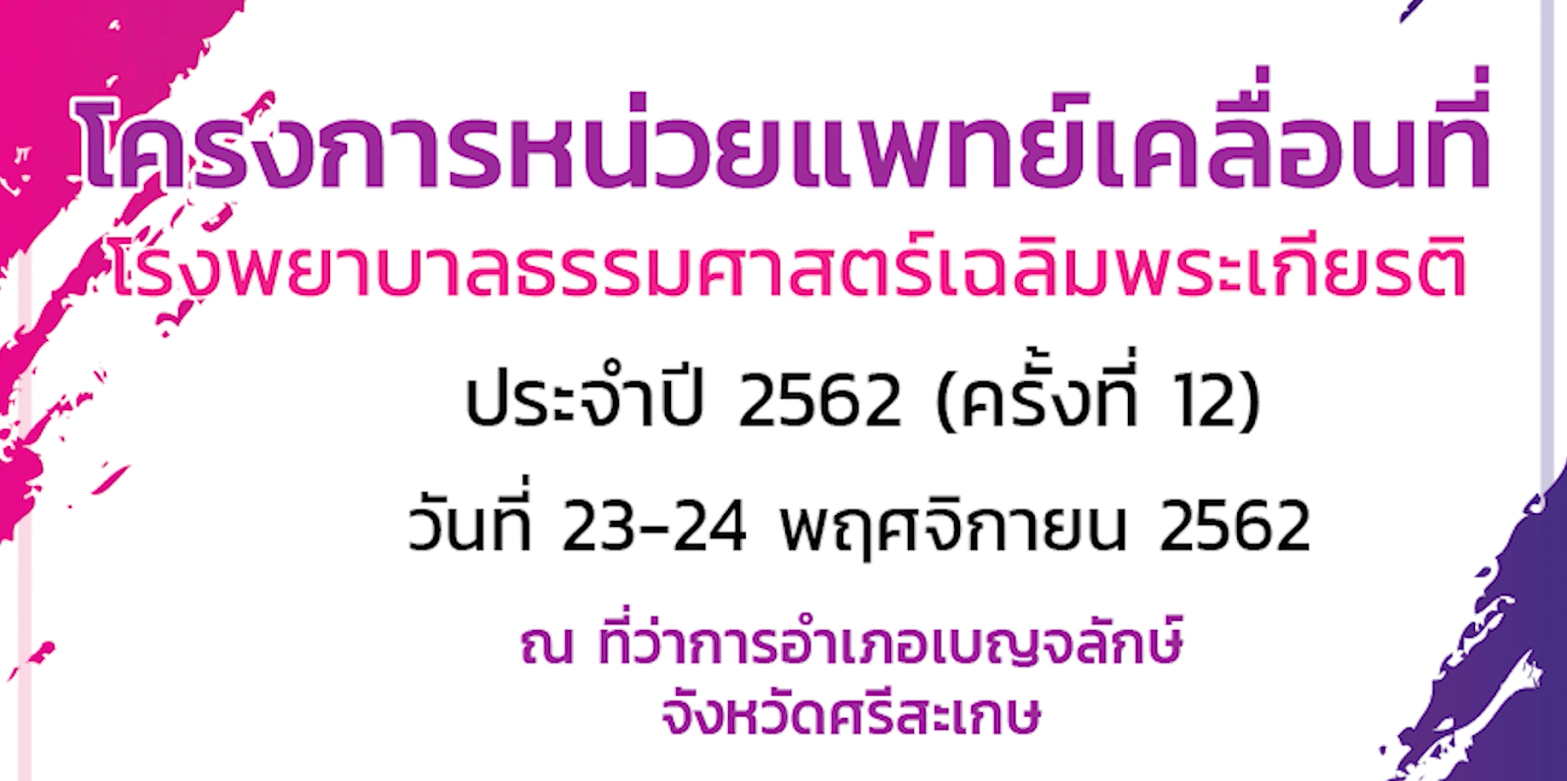
In 2019, Thammasat University Hospital organised its 12th Mobile Medical Unit project at Benyalak district, Si Saket Province. Objectives of this project were to provide medical, dental and health services to poor people; offer medical supply to Buddhist temples; and provide financial support to community hospitals in the area. Moreover, books, stationaries, sport equipments, and donated money were offered to students in local primary schools. From November 22 to 25, 2019, approximately 400 people received the medical and dental services.

Please see the project detail here:

APTU and IIED research collaboration on Urban Resilience (2017-2018)

In 2017-2018, Faculty of Architecture and Urban Planning, Thammasat University and International Institute for Environmental Development, UK, collaborated in a research project “Planning For Eco-Cities And Climate-Resilient Environments: Building Capacity For Inclusive Planning In The Bangkok Metropolitan Region (PEACE-BMR)”, funded by Newton Fund Institutional Link (British Council and Thailand Research Fund).

According to the project website, “[t]his collaboration aims to strengthen research links between the UK & Thailand to develop existing research capacity on urban climate resilience & inclusive, low carbon development. The collaboration will do this through building capacity of Thai researchers, raising awareness of urban stakeholders & incorporating local knowledge & practice into urban planning. This will equip urban actors with the skills and networks to address environmental & climatic issues facing Bangkok, with a specific focus on ensuring the inclusion of particularly vulnerable, low-income communities.”

Please see more detail here: http://www.urbanfuturestu.com/what-we-do/urban-resilience-2/iied/

Urban Futures & Policy Lab joined UKNA in the SEANNET program

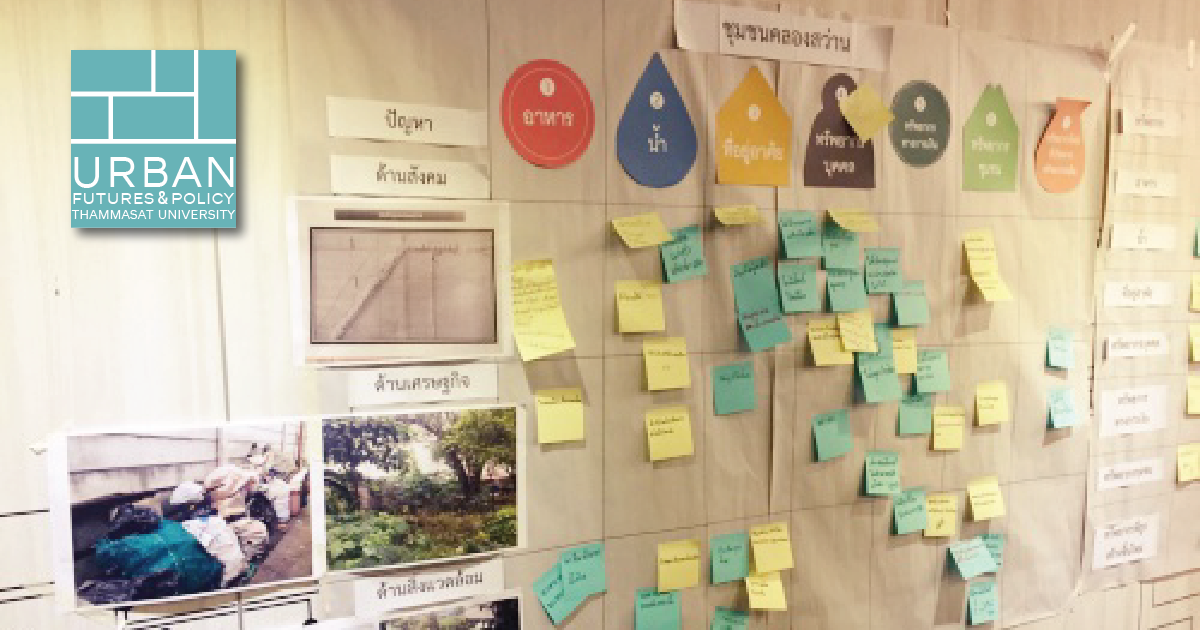
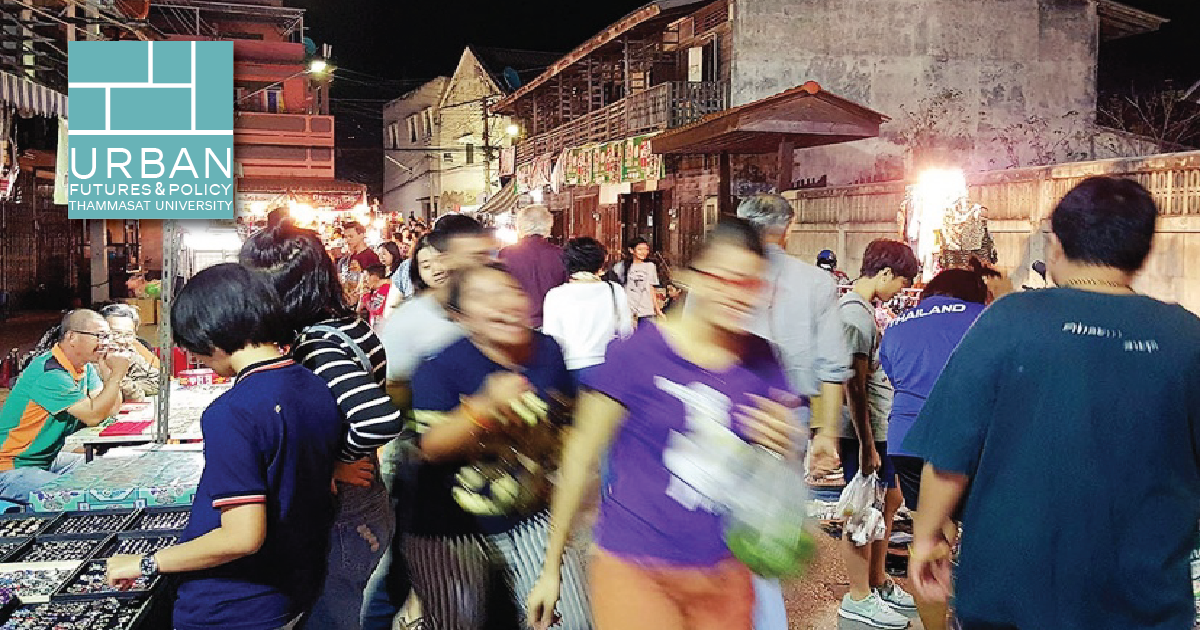
From 2017-2020, Urban Futures and Policy Lab, Faculty of Architecture and Planning, Thammasat University participated in the four-year initiative of Urban Knowledge Network Asia (UKNA) on research, teaching, and dissemination of knowledge on Asia through the prism of the city and urban communities in the program called the Southeast Asia Neighbourhoods Network (SEANNET), funded by the Henry Luce Foundation (New York, USA).

According to the Urban Futures’ website,

“The program supports the development of contextualized knowledge on the spatio-human environment of neighborhoods in six select Southeast Asian cities through participative field-research, in situ policy roundtables, local capacity building exercises, academic conferences, publications, documentary films and new syllabi.

The aim of this micro-local framework of scholarly and civic engagement is to generate alternative, generalisable paradigms on city neighborhoods. The second ambition of the programme is to shape and empower a community of early career scholars and practitioners working on/from Southeast Asia who will contribute to the growing body of humanistically informed knowledge on Asian cities.”

Asst. Prof. Boonanan Natakun from Faculty of Architecture and Planning, Thammasat University is the researcher from Urban Futures and Policy Lab, and contributed one of the six case studies in this project. The six case studies included Mawlamyine in Myanmar; Chiang Mai and Bangkok in Thailand; Manila in the Philippines; Ho Chi Minh City in Vietnam; Surabaya in Indonesia. Asst. Prof. Boonanan contributed the case of “Wat Kae Nang Leong”, Bangkok Thailand.

Please see the website for more details of the case studies and the project.

http://www.urbanfuturestu.com/what-we-do/community-development/seannet/

https://ukna.asia/projects/wat-kae-nang-leong-bangkok-thailand

16th IAVE Asia Pacific Volunteer Conference

On November 11-15, 2019, Thammasat University collaborated as a partner organisation in organising the 16th IAVE Asia Pacific Volunteer Conference, the hosts of which were International Association for Volunteer Effort (IAVE) and Volunteer Spirit Network (VSN). Other partner organisations included Volunteer Service Overseas (VSO), Khon Thai Foundation, and Why I Why Foundation.

The conference was organised under the theme “UNLOCKING THE POWER OF VOLUNTEERING”, under which there were 5 sub-themes

  1. Make the Invisible Visible: Presenting case studies and research that highlight power of community participation and ownership and the changes that sustain in the community
  2. Simple but not simpler: Sharing inspiring practices when dealing with challenges and how to overcome them.
  3. Stronger together: Driving a powerful conversation where global and local leadership organisations for volunteering, NGOs, corporations, government, civil society and academia join to help shape the kind of future we want for volunteering and how all sectors can work together to realise that future.
  4. Flipping SDGs Conversation: Discussing how we can encourage and provide accessibility to people from all levels to engage in volunteerism. Also, what does ‘leave no-one behind’ mean for volunteering today? – how is volunteering reaching into the lives of the poorest people. 

Please see the detail of the event here: http://iaveap2019.org/

Please see role of Thammasat University here: http://iaveap2019.org/about-us/