Environmental policies extended to suppliers

Thammasat University ensures that the minimization policies are extended to outsourced suppliers and the supply chain, especially suppliers of equipment, stationary, and building contracts. The supporting evidence attached herewith is the contract for hygienic service and facility maintenance between Thammasat University and a private sector for buildings of medical science faculties.

As shown in the contract attached herewith, the company has to use environmentally friendly cleaning solutions which has to be tested by the university committee (p.10/29 and 17/29 – in the red square). The company is also required to have publicly accepted standard for pollution control in place for the whole period of the contract.

Regarding waste management, the company is obliged to arrange a proper garbage transportation from the faculties to an assigned waste management facility. The garbage has to be classified and managed properly (p.10/29, 18/29 – in the red square).

The similar requirements were applied to other contracts too, for instance, the contract for hygienic service and facility maintenance between Thammasat University and a private sector for common areas in Thammasat University Rangsit Campus.

Please see the document here:
Extending disposable policy to outsourced services: MOU with CPALL

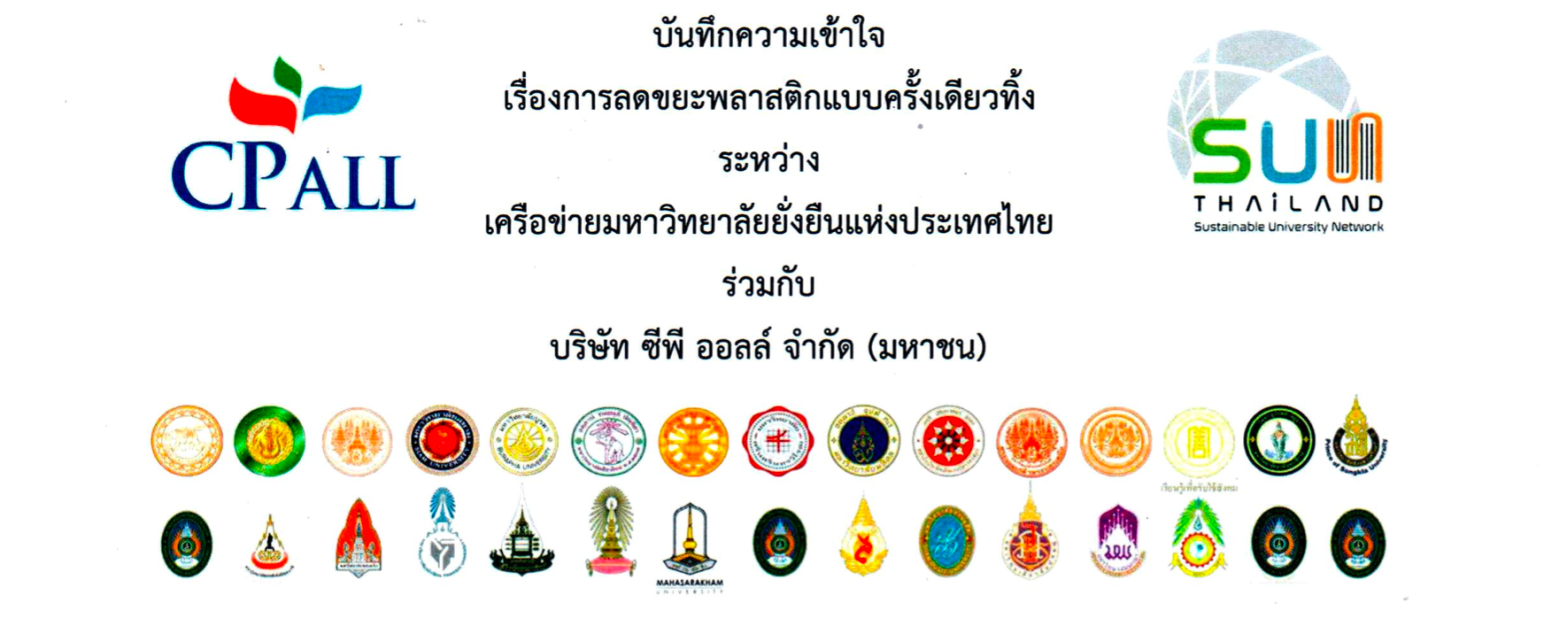
0n July 5, 2018, Thammasat signed MOU with 30 thai universities, in the name of Sustainable University Network (SUN), and CPAll, the largest supply-chain convenient stores (7-Eleven), for the initiative on reduction of single use plastics on campus.

The MOU was signed at Thammasat University, with representative from Pollution Control Department witnessing the signing. The initiative was planned to be tracked by mobile phone application, created by another private sector company (Kid Kid company limited).

The measures stated in the MOU are as follows:

  1. By default, plastic bag will not be given unless the product is hot. The store may sell plastic bags or prepare bags for borrow, or any other measures depending on agreement between the university and the company;
  2. Reducing number of plastic cups by 7-Eleven reducing 2 baht per cup to motivate customers to bring their own cups;
  3. By default, plastic spoons, forks, and straws will not be given to customers automatically. The cashier staff must ask customer first if they want one;
  4. Universities in this MOU and the company will stop using foam-based utensils in 7-Eleven and in-university canteen or restaurants.

Please see the MOU below:

Thammasat Zero Waste Policies

Since 2011 until present day, Thammasat University implemented a set of announcements, policies and activities to minimize disposable items as a part of Thammasat Zero Waste Policies. Here are some of the concrete examples:

  • Since 2011, Thammasat has Implemented Paperless meeting policy: Policy to replace hardcopy printing with e-document in university and faculty level meetings.
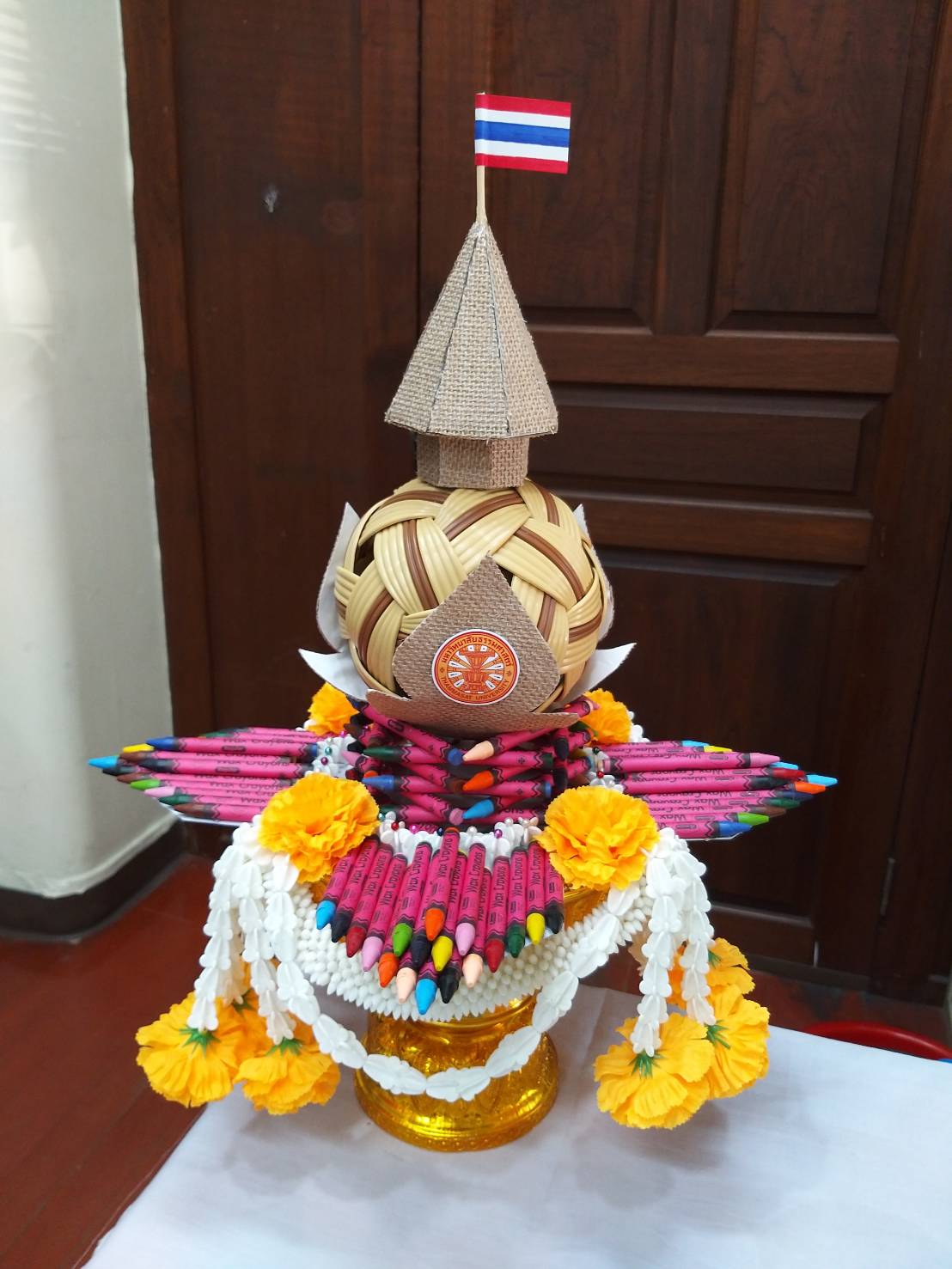
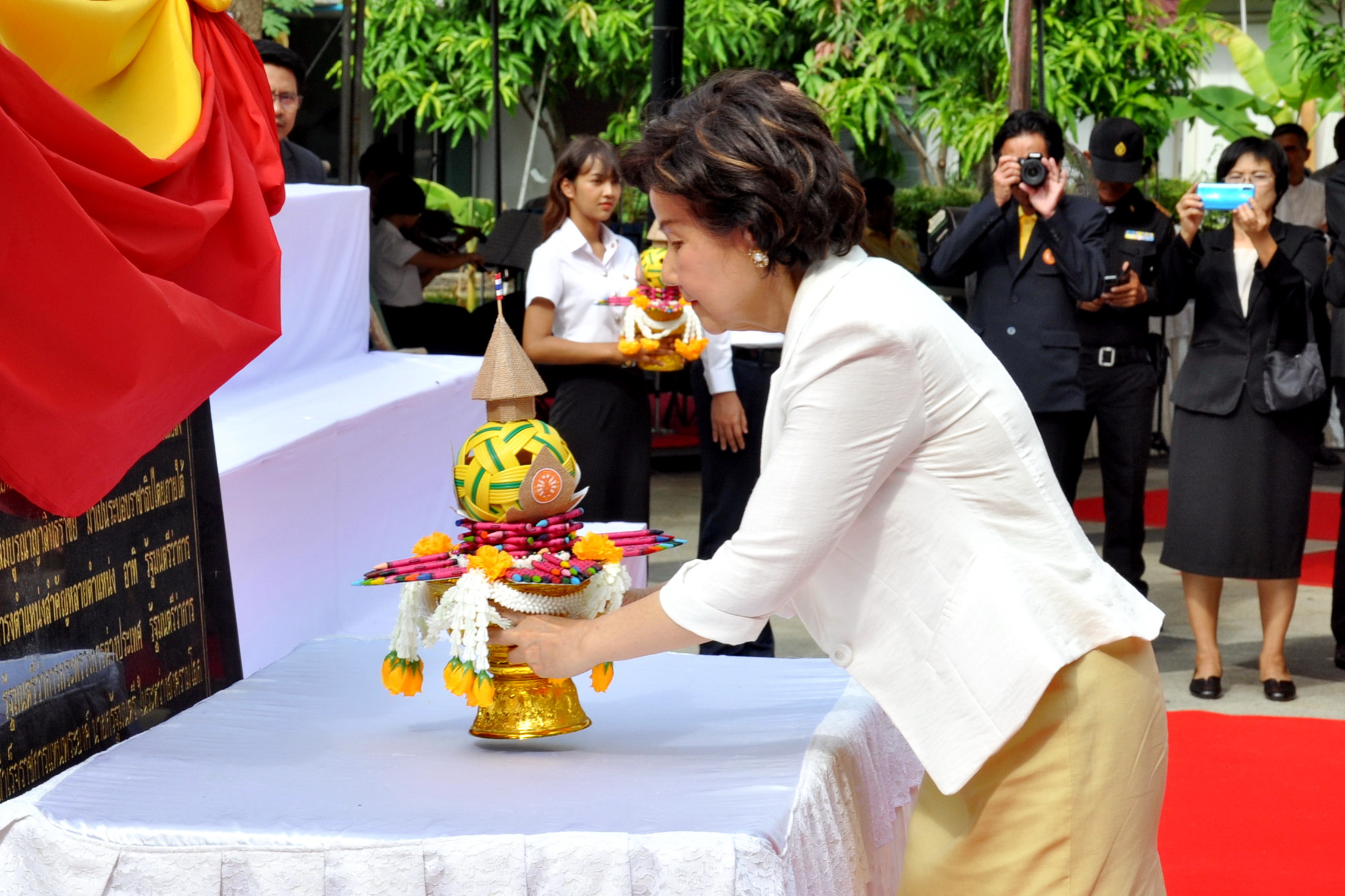
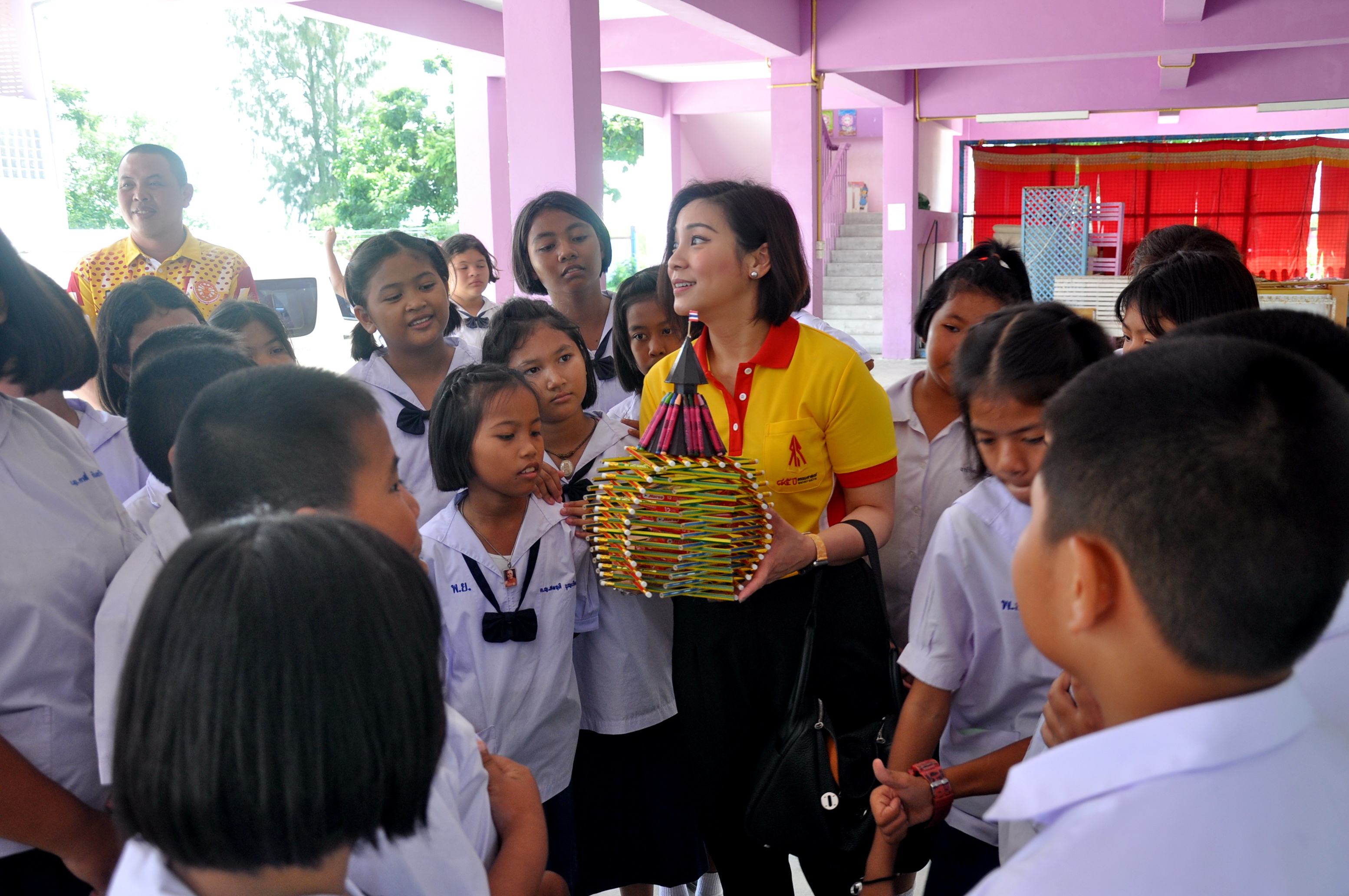
  • In 2019, Thammasat has policy on materials used for ceremonial pedestal trays, to replace flowers with useful items such as stationary and small sport equipments, so that those items can be later donated to schools around the area
  • Other projects to reduce the use of deposable items include: ‘Pinto’ (reusable Lunch box) project / reusable cloth bag project; minimization of disposable items from events / Thammasat Refill Shoppe Project
  • Online meeting policy
  • Thammasat issued ‘Zero Waste Campus Handbooks’ as a tool for the whole campus to apply to their operation.

No Single-Use Plastic Policy

Thammasat has campus wide policy to reduce single use plastics and collaborated with several partners to implement the policies. Guidelines, facilities, and policies have been implemented actively since 2019.

  • Thammasat has campus wide policy to reduce single use plastics and collaborated with the Department of Pollution Control on the reduction of plastic project.
  • Thammasat issued ‘Zero Waste Campus Handbook’ as a tool for the whole campus operation.

Thammasat Recycling Policy

Thammasat has measurement of waste through the management of ‘garbage recycling bank policy’, which uses application from SCG (private sector) to calculate amount and price of recycled items sold, and through the ‘campus garbage facility, which is outsourced and required monthly reports sent to university.

**note: the waste from campus are segregated for recycling and the rest converted to REF. None sent to landfill.

Please see related documents here:

Thammasat Waste Management Policies

Thammasat has policy on waste management, especially for hygienic aspects/ chemical waste from labs/electronic waste in 2019 and 2020. The policy runs incorporating with outside parties, including private sectors and other universities. Thammasat is one of five active university nodes, covering the Central Region of Thailand for training chemistry lab safety under the National Project: Enhancement of Safety Practice of Research Laboratory in Thailand.

MOU between Thammasat University and Advance Wireless Network (AWN) on E-WSte was effective in 2018.

MOU between Thammasat University, other universities, and the National Research Committee of Thailand (NRCT) on the Enhancement of Safety Practice of Research Laboratory in Thailand in 2018 and 2019

Thammasat Ethical Food Source Policies

Thammasat has policies to ensure vegetables and meat products in all canteen must be GAP grade. University provide on-campus vegetable farm where non-chemical growing process is mandatory. Planting materials and fertilizers are also produced on campus to ensure non-chemical conditions.

Solar Cafe, on-campus restaurants is a showcase for Thammasat’s policy on etheical xourcing of food and supplies

On-campus Organic Farming is another clean food source that reflects Thammasat’ policy

– Thammasat has ‘Green Market @ TU Hospital’, started since 2006 with the policy to ensure that food and items sold here are from local communities and grown with safety process, non-chamical uses.

Please see related policy documents here:

Thammasat Professor in the National Committee on Sustainable Development

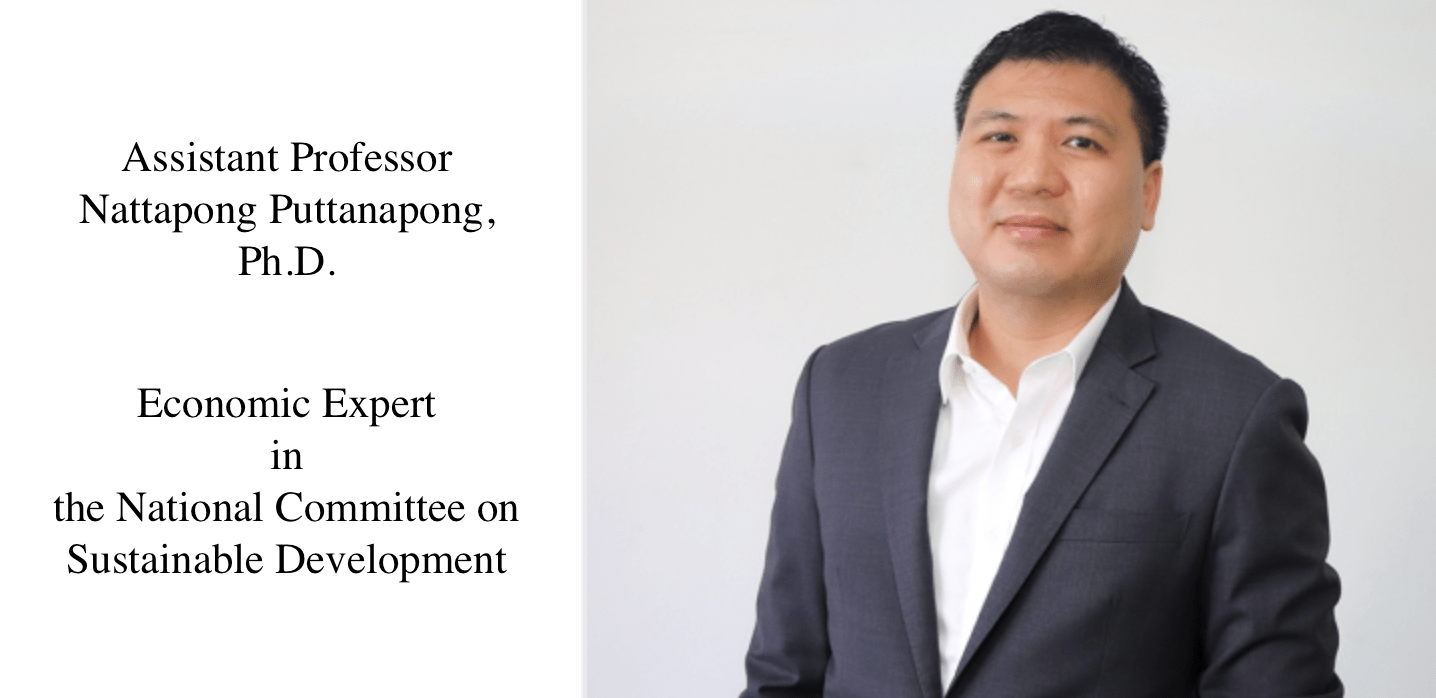
Since February 2020, Assistant Professor Nattapong Puttanapong , Ph.D from Faculty of Economics was appointed to be an economic expert in The National Committee on Sustainable Development which is the official national body driving SDGs in Thailand.

Please see the Official Appointment Announcement here.

The SDG-Foresight project for the Thailand SRI Strategic Plan

From March to June 2020, SDG Move undertook policy-focused research for Thailand Science Research and Innovation (TSRI), an organization under the Ministry of Higher Education, Science, Research and Innovation. It was the analysis of data and the design of future scenarios to support the science research and innovation plan. TSRI wants this development plan to be the catalyst of change that would steer Thailand to progress more sustainably and inclusively along the line of the United Nations’ Sustainable Development Goals (SDGs).

The research was conducted at two levels, namely national and regional level. Foresight (i.e. Horizon Scanning and Delphi) was used as the research methodology. Data collection was conducted online due to the COVID-19 pandemic.

At the national level, the SDG Move research team did the horizon scanning by reviewing secondary data related to all SDGs from national and international data source, as well as scanning social signals appearing in social medias and news. Then 60 experts were selected and asked to do adapted Delphi surveys. The surveys were conducted two rounds. The first round was to verify the critical sustainability issues found from the Horizon Scanning. The second round was to prioritize the issues, using two main criteria namely the level of importance and the level of policy readiness.

Moreover, SDG Move also worked with 6 regional teams, using the same methodology, to obtain each region’s crucial sustainability challenges, as well as to assess knowledge stock and gap for these challenges. The findings were used as inputs for TSRI strategic plan for budget year 2021.

Please see the report here:

Participatory body for stakeholder engagement for the “Best Community Welfare Fund/organization Awards”

In 2019 to January 2020, Puey Ungpakorn School of Development Study (PSDS) initiated the Award giving project: the “Best Community Welfare Fund/organization Awards”. The process for the organization of this project was operate by a participatory body for stakeholder engagement, involving partners at several levels.

The objectives of the awards were (1) to give a recognition and admiration for the outstanding community welfare fund/organizations; (2) to strengthen the network and the organizations using the Awards as a kind of experience sharing platform: and (3) to increase public awareness on the social welfare policies in accordance with Puey Ungpakorn ideas.

The partner organizations include Foundation for Thailand Rural Reconstruction Movement Under the Royal Patronage, the National sub-committee for the promotion of community fund, the National Community Fund Network, Moral Center, Community Organizations Development Institute, and Ministry of Social Development and Human Security.

The awardees received funding to strengthen their community welfare fund. For running this program, the participatory process was divided to 3 levels, provincial level, regional level, and national level. It involved so many multi-stakeholders to promote and support program.

PSDS has been a part of the National sub-committee for the promotion of community fund since 2016, providing academic support and research to the committee. Asst. Prof. Jitti Mongkolchaiaranya, the dean from 2016-2020, had been a member of the committee and brought PSDS and its expertise into the sub-committee since.

Please see the detail of the award here: